
Beyond the Merger: EXALTA Raises the Bar for Integrated, Scalable MedTech Partnerships
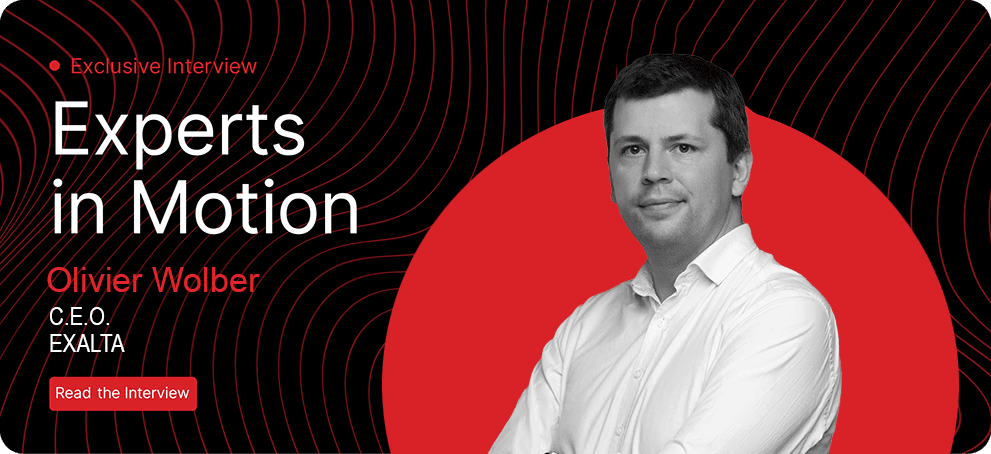
From legacy brands to a unified vision, CEO Olivier Wolber shares how EXALTA’s integration is unlocking new value for customers worldwide.
An Interview with Olivier Wolber, CEO, EXALTA
By Guillaume Viallaneix | Editor-in-Chief, The MedTech Digest & President, MedTech Momentum

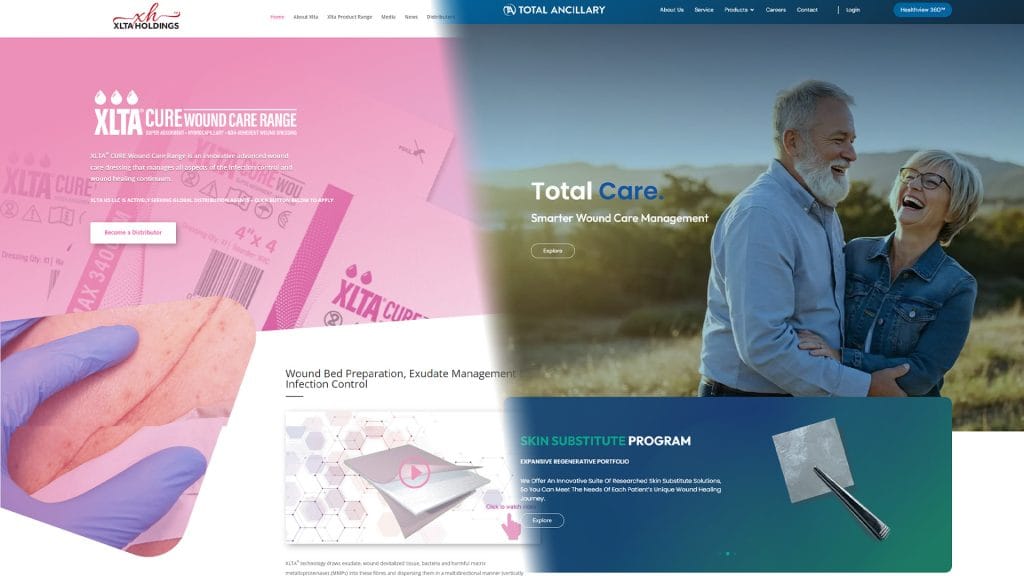
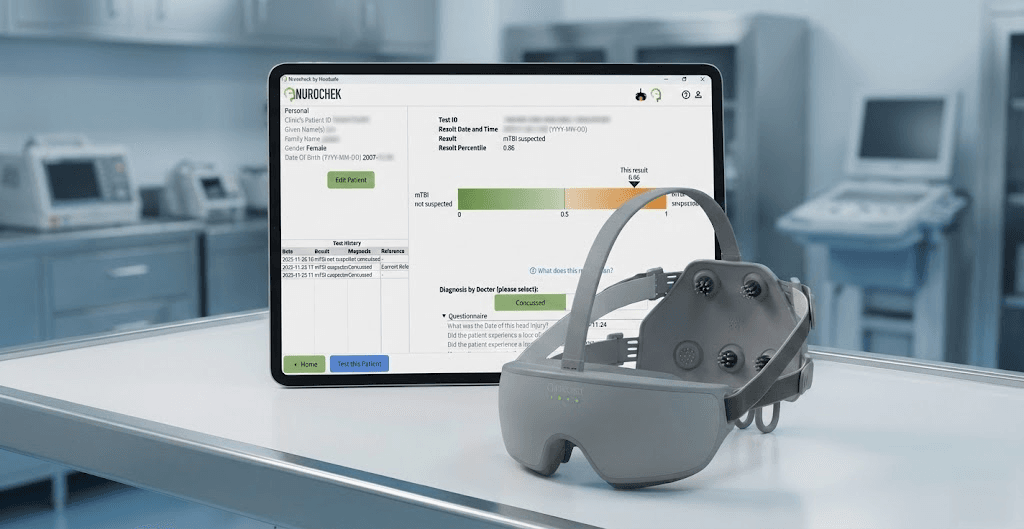
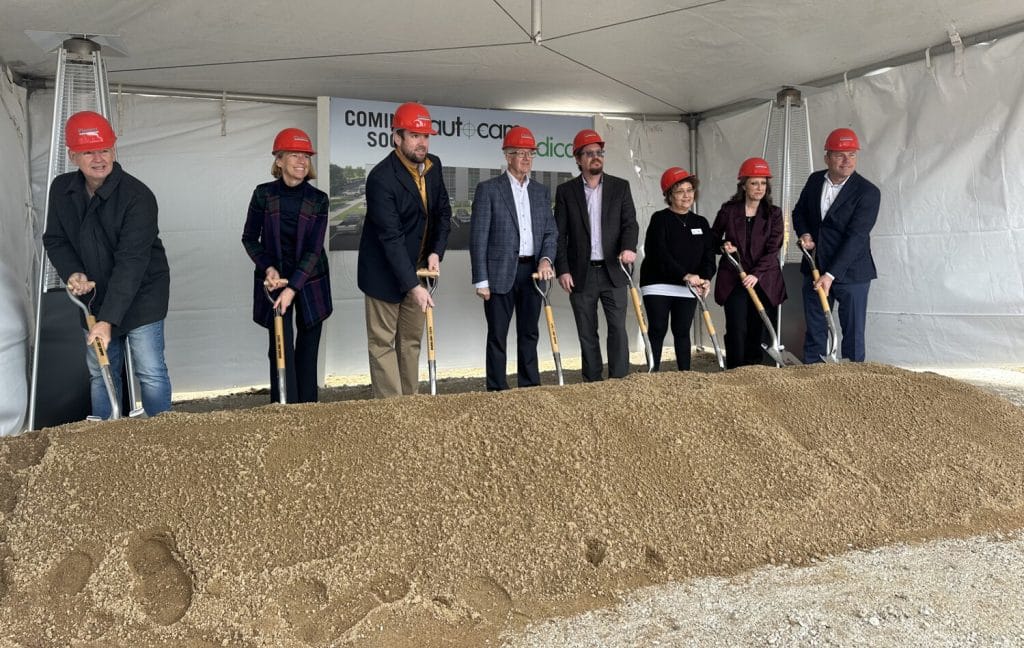
When you’ve partnered with a company for more than a decade, you get to see its evolution up close, the people, the culture, the moments that define it. At MedTech Momentum, we’ve had the privilege of walking beside Intech for over 11 years, watching it grow from a fast-moving manufacturing leader in Orthopedics into one of the three building blocks of what has now become EXALTA, a unified MedTech group built on collaboration, innovation, and trust.
So, when I sat down with Olivier Wolber, EXALTA’s new CEO, it didn’t feel like an interview. It felt like catching up with an old friend about a new adventure, one that could reshape how OEMs think about partnership.

Guillaume Viallaneix: Olivier, let’s start with you. Where did life begin, and how did you find your way into MedTech?
Olivier Wolber: I was born and raised in Nîmes, in the South of France, a sunny place, not too far from Marseille. I studied engineering at École Polytechnique, which was… very theoretical. I loved science, but I also wanted to see real-life results, not just equations. So, I went on to business school at HEC Paris to balance it out.
After that, I joined the Boston Consulting Group. That was my “real-world” education. One week you’re in a factory, the next in a boardroom. I worked on R&D, operations, sales, M&A, and that’s where healthcare and MedTech really grabbed me. It felt purposeful.
GV: You’ve lived in several countries too, right?
OW: Yes, France, the U.S., Brazil, Switzerland, Germany. Each move changed my perspective. When I first arrived on the US East Coast, my oldest child was just three months old. We built a life there. Then we spent a year in São Paulo, which was eye-opening in every possible way. And continued onto other international relocations – each with a new set of discoveries.
The U.S. taught me structure and discipline. Brazil taught me creativity and adaptability. I think that mix, discipline, and flexibility define how I engage with our teams today.
GV: From there, you jumped into Smith+Nephew, and later CMR Surgical; two very different worlds. What did you learn?
OW: At Smith+Nephew, I joined the CEO as Chief of Staff and Head of Strategy. That role gave me a front-row seat to everything, such as R&D, supply-chain challenges, and commercial realities. An outstanding opportunity to discover a company and an industry!
After a year, I moved into GM roles and had the opportunity to fall in love with Orthopedics – spending hours and hours in the OR across European countries, building relationships with passionate and outstanding doctors. I learned how complex it is to deliver innovation consistently, country by country, surgeon by surgeon.
Then came CMR Surgical, the Robotics chapter. Imagine going up against Intuitive Surgical, a company that built its segment for 20 years. It was like David facing Goliath. But it was thrilling. Robotics looks simple from the outside, but behind that arm is a world of software, regulatory layers, and months of surgeon training. And with that came the scars of scaling a business – three-digit growth requires some intensity!
Seeing how technology could truly change the way surgery is done hooked me for life.
GV: Now you’re leading EXALTA, born from Resolve Surgical, Tyber Medical and Intech. What convinced you to take that leap?
OW: When I was with Montagu Private Equity, I was asked to help Intech prepare for transformation. Then came the merger project. The more I dug in, the clearer it became for me that it was a unique opportunity to build an end-to-end platform supporting OEMs from concept to clearance to market deployment like no other. An opportunity to make a long-lasting impact in the industry and for patients across the world. Usually, mergers are about scale. This one was about purpose, creating a partner that could move from concept to commercialization seamlessly, at scale and across geographies. Once I saw that, I knew I wanted to be part of it.
GV: A lot of mergers sound great in press releases but fall apart later. What makes this one work?
OW: It’s all about intent and trust. What we’re really solving for is the pressure OEMs feel every day. Too many projects, not enough bandwidth. EXALTA gives them a way to move faster without stretching their teams thin.
With this merger, there is clear value-add beyond capacity, through the integration of complementary capabilities that reduce handoffs, execution risk, and time to market.
For legacy Tyber Medical and legacy Resolve Surgical which have been growing nicely, EXALTA becomes a critical enabler for future growth, being suddenly supported by a large scale Manufacturing backbone. It enables them to work through more projects for more customers. For legacy Intech sites, it is the opportunity to go beyond the limitations of CMO / CDMO and to take partnerships with OEM to the next level, offering an end-to-end set of services to support full system launches.
And if you add to that the highly complementary capabilities – in terms of products, end-markets, technologies – you have the winning recipe.
In our case, one plus one plus one equals ten!
GV: Can you share a moment when this “one team” approach proved its value?
OW: Sure. Right after closing the merger, legacy Tyber Medical organization signed a major global contract with one of the world’s largest OEMs. They loved the technology but worried about capacity. Once EXALTA came together, we were able to pull resources from seven sites across three regions.
Within four months, demand tripled, and we delivered. That was the first real-life test. It showed customers that this integration is making us better, faster, stronger.
GV: And culturally? If we consider the previous Intech operated with a lot of autonomy, that means Nine companies, nine histories, that’s a lot of DNA to blend.
OW: It is. You can’t just flip a switch and say, “Now we’re one tribe.” It starts with recognizing the need for change. Every site has seen its own limits over the past few years, due to market challenges, capacity ceilings, and system constraints. EXALTA removes those ceilings by operating as a single, coordinated system. So, when we presented EXALTA as a way to go further together, people understood.
It doesn’t mean it is easy. There’s resistance, of course, as always with change. But there’s also excitement. We’re building something no site in the group could achieve alone.
GV: That brings us to the new name. Why EXALTA?
OW: We wanted a brand that conveyed pride, boldness, and forward-looking perspectives. EXALTA comes from the word elevate. It’s about lifting standards, for customers, for our teams, for patients.
Practically speaking, you can’t be “one” company and have three names. So, we made a clean break. No more Intech, Tyber Medical, or Resolve Surgical in how we present ourselves. Just EXALTA. One team, one mission, one culture, one brand.
GV: Let’s talk about what this means for customers. What changes for them, and what stays the same?
OW: What stays the same is the partnership and customer service. The people they trust are still here, just supported by a bigger platform, more resilient and more capable.
What changes is the scale of what we can do together. We can take a concept, help design and validate it, own the regulatory file, and manufacture at volume across regions. OEM teams are constantly forced to choose which projects move forward, so if we can take some of that pressure off and help them move faster, that’s real value. The experience becomes smoother, faster, and more reliable.
If I had to summarize it: trusted relationship, stronger backbone.
GV: You’ve coined the term CDMO+. How would you explain that in plain language?
OW: A traditional CDMO builds what you ask for. A CDMO+ expands responsibility upstream and downstream, helping you figure out what to build and how to get it approved.
The “+” is simple : we co-create. We sit with OEMs at the whiteboard stage, go through their portfolio and discuss gaps to fill, shape the design and regulatory strategy together, and stay with them through manufacturing and launch… It’s not outsourcing; it’s partnership in motion.
GV: That philosophy feels close to home for us. MedTech Momentum’s been part of Intech’s journey for more than a decade, so I know that “partnership, not transaction” mindset well.
OW: Exactly. You’ve lived it from the inside with legacy Intech. EXALTA builds on that same spirit, collaboration, trust, and shared success. That’s how we’ll grow.
GV: Let’s shift to the clinicians for a moment. What difference will they see, the surgeons, hospitals, and care teams?
OW: When we perform better, our customers feel it. No backorders. Faster launches. Access to new technology sooner.
For clinicians, it comes down to trust. If we do our job well, they never experience a delay or a surprise in the OR. Everything just works, and that reliability ultimately benefits the patient.
If one day a surgeon says, “Last year this was just a concept at AAOS. My device company managed to bring it in my hands within 12 months, exactly how I envisioned it. I don’t know who they partnered with behind the scenes, but I hope they keep that team close!” that will be my proudest moment.
GV: Some smaller OEMs might worry EXALTA’s become “too big.” How do you answer that?
OW: We’re interested in impact, not size. If a small OEM is working on something that could meaningfully change patient care, we’re in. Big or small, what matters is innovation that moves the needle at scale. We want to be the partner that helps critical innovation get there faster and safer.
GV: You’ve got major operations in the U.S., Europe, and Asia. What’s next geographically?
OW: We’re evaluating expansion; our current footprint will likely not be sufficient to support our long-term growth ambition and impact. Asia, particularly Malaysia, has tremendous potential. It’s about balance: the sweet spot is keeping innovation and clinical feedback close to the U.S. and Europe while leveraging cost-effective, high-quality manufacturing scale. Global, yet local. That’s our thinking.
GV: Last question. You’ve taken the reins at a transformative time. What do you hope your legacy will be?
OW: I see myself as a steward. I’ve inherited something great with Intech, Tyber, Resolve, and my job is to leave it much stronger than I found it.
That’s simple to say, harder to do.
GV: Beautiful. Olivier, thank you for taking the time and for leading this new chapter with so much clarity and heart.
OW: Thank you, Guillaume. It’s great to have the opportunity to exchange with you, given your intimate knowledge of one of our three legacy organizations.
MedTech is evolving quickly, and the companies that will win are the ones that collaborate across the entire lifecycle of innovation. For EXALTA’s customers, the message is clear: this merger is about synergy and customer care. By combining engineering excellence, clinical insight and manufacturing scale, we help ensure that good ideas don’t get stuck. When we move together, we accelerate MedTech for the people who need it most: patients.
Learn more at www.EXALTA.com