
No More Guesswork: Philip Gower on How Headsafe Is Changing the Way America Diagnoses Concussions
Headsafe’s Chief Strategy & Commercial Officer has built Inc. 5000 companies, navigated exits, and mentored a generation of healthcare leaders. Now he is bringing the most disruptive concussion tool in the U.S. market to every clinic and sideline that needs it.
An Interview with Philip Gower, Chief Strategy & Commercial Officer, Headsafe USA By Guillaume Viallaneix, Editor in Chief, The MedTech Digest & President, MedTech Momentum
Every great company has a story that unfolds in chapters. If you have been following our Experts in Motion series, you have read two of Headsafe’s most compelling ones already. First, Dr. Adrian Cohen, the founder and physician who spent years on rugby sidelines and in rescue helicopters before declaring, “We were relying on guesswork to assess concussions. That had to change.” Then Craig Corrance, the CEO who joined to turn that science into a scalable U.S. commercial launch.
Today we meet the person executing on the ground.
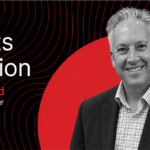
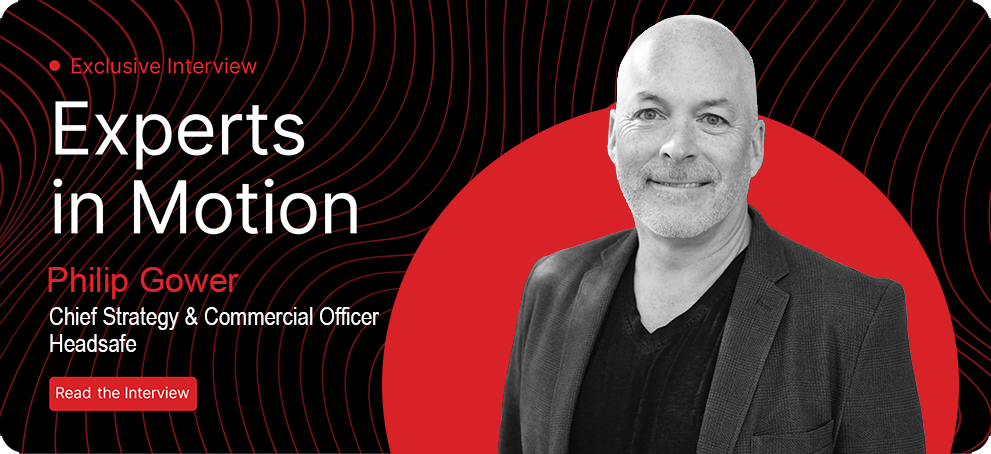
Philip Gower is Headsafe’s Chief Strategy & Commercial Officer. Over three decades he has grown companies from startup to nearly 300 employees, earned an Inc. 5000 recognition, guided businesses through IPOs and exits, and become one of the more sought after mentors in MedTech. He came to Headsafe in late 2025 and has not looked back.
This conversation is for clinic owners, distributors, sports medicine professionals, and entrepreneurs who want to understand where Headsafe is heading, and what it actually takes to build something that lasts.
Guillaume: Philip, before MedTech, before business, who were you growing up?
Philip: The short answer is a musician and an athlete who could not choose between them. I grew up in Goderich, Ontario, started the Royal Conservatory of Music at six, studying piano and drums simultaneously, and was playing in church by eight or nine. Sport was equally important: hockey, volleyball, baseball. I played volleyball at the United States Volleyball level when I moved to the States and still play today. Both music and sport teach you the same things that matter most in business: how to perform under pressure, how to read a room, and how to make the people around you better.
Guillaume: You studied law, then pivoted hard into business. What happened?
Philip: I bought a small telecom company from my uncle at twenty years old. Nine months later, Bell Northern Telecom opened an installation office in our town and started selling systems cheaper than I could buy them wholesale. I was done. My parents helped me climb out of it, and the humiliation was worth every lesson.
💬 “Due diligence is not a financial formality. It is about truly understanding the market, the competition, and your own blind spots before you commit. I was twenty years old and I learned a lesson that some executives never learn at all.”
From there I spent six years at Target Corporation in asset protection, moved into sales and operations in the consumer goods world, and eventually found my way into healthcare through consulting in 2007. In 2012 I co founded IntelliHearts, a SaaS based MedTech platform company. We grew to nearly 300 employees, made the Inc. 5000 list for growth, navigated COVID, and took the company through a significant transaction. Thirteen years of building, and every year taught me something new about how to hold a company together when things get hard.
Guillaume: What do you tell young MedTech entrepreneurs when they ask you how you did it?
Philip: Three things. Dig in. Really understand the market and the customer’s actual problem, not the one you assume exists. Build relationships before you need them. Every meaningful opportunity I have ever had came through a human connection, not a pitch deck. And get back up. The ones who win are not the ones who avoid hard moments, they are the ones who decide those moments do not define them.
💬 “Surround yourself with people who are better than you in the areas where you are weakest. And never confuse activity with progress.”
Guillaume: And then Headsafe. How did that connection happen?
Philip: I was networking hard after my previous chapter and got introduced to one of Headsafe’s investors through a physician colleague in Minneapolis. I went through an interview process for a fractional CEO role. They chose Craig Corrance, absolutely the right call. But the board connected us directly, and forty eight hours later Craig and I were on a call. I do not think I have ever hit it off better with another senior executive. We were aligned on everything that mattered. By October 2025 I was effectively full time. On January 1st, 2026 I joined as Chief Strategy and Commercial Officer.
Guillaum: What convinced you that the technology was real?
Philip: I went to Twin Cities Orthopedics, a major sports medicine clinic connected to professional and club sports here in Minneapolis, and asked their physicians directly what their answer for concussion protocol was. Every one of them described a landscape all over the map. Cognitive tests take 20 minutes and are well known to be sandbagged by athletes who want to return to play. Eye tracking systems require a dark room and significant setup. Nothing truly objective existed at the point of care.
Their reaction when I described Nurochek was simple: if this does what you are describing, run to it.
Then I looked at the history: pilot studies with Randwick Rugby players in Australia going back to 2017, years of clinical research, and three FDA clearances earned the hard way. This was not a concept. This was validated technology.
Guillaume: For a clinic owner or medical director reading this, what does adding Nurochek actually look like in practice?
Philip: You place a lightweight five electrode headset on the patient. The system presents a controlled light stimulus and measures the brain’s involuntary electrical response: Visual Evoked Potentials, or VEPs. The AI analyzes over 400,000 data points and delivers an objective result in approximately two minutes. A trained nurse or technician can administer it. No baseline test required. No dark room. No prior patient data needed.
Guillaume: What are you looking for in distribution partners?
Philip: Relationships, not volume. I want partners with deep clinical connections in sports medicine, urgent care, and emergency medicine, especially people who genuinely care about outcomes and have the credibility to open the right conversations. We support those partners aggressively with training, clinical education, and marketing tools.
💬 “We are not looking for people who move widgets. We are looking for people who have a passion to make a difference, and the relationships to back it up.”
If you are a distributor with those connections and believe in what objective concussion assessment can do for your customers, I want to hear from you.
Guillaume: How big is this market, really?
Philip: The numbers are hard to ignore. The U.S. alone spends $1.4 billion a year on concussion assessment, growing at nearly 8% annually, that is a $2 billion market by 2030. Globally, we are looking at over $4 billion. Eleven million concussions are treated in this country every year, and yet the CDC estimates that half of them still go undetected or undiagnosed. Half. And here is the part that should get any investor or distributor’s attention: there is no dominant objective competitor in this category. That door is wide open.
Guillaume: Last question. Once all is said and done, how do you want to be remembered?
Philip: Connection and impact. I want the people I have worked with to say Philip made them better, the young entrepreneur who needed someone to believe in them, the distributor who needed a partner who would actually show up, the clinician who finally had a tool that gave them confidence, the parent on the sideline who finally got an answer.
💬 “If I can draw a straight line from the work I do every day to those outcomes, that is enough. That is why this role at Headsafe, more than anything I have done before, feels like exactly where I am supposed to be.”
Philip Gower serves as Chief Strategy & Commercial Officer at Headsafe USA. Nurochek™ is FDA cleared as an aid in the diagnosis of concussion for individuals aged 12 to 44, delivering objective results in approximately two minutes with no baseline test required.
Clinic owners, urgent care networks, and sports programs: learn more or request a demo at www.headsafe.com or contact Philip directly at philip.gower@team.headsafe.com
Distributors with strong clinical relationships in sports medicine, urgent care, or emergency medicine: Philip wants to hear from you.
Missed the earlier chapters? Read our interviews with Dr. Adrian Cohen and Craig Corrance at themedtechdigest.com.
Guillaume Viallaneix is the Editor in Chief of The MedTech Digest and Founder & President of MedTech Momentum, a full-service MedTech marketing agency based in Orlando, Florida. Since 2014, MedTech Momentum has partnered with more than 150 MedTech companies worldwide. Learn more at www.medtechmomentum.com.