

Predictable Setups, Reliable Execution: David Holdford on Building IOS for the Real World of Radiation Oncology
From patient positioning and immobilization to workflow fit and reproducible radiotherapy setups, David Holdford has helped build a company around a simple idea: when clinics can trust the setup, everything works better.
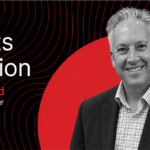
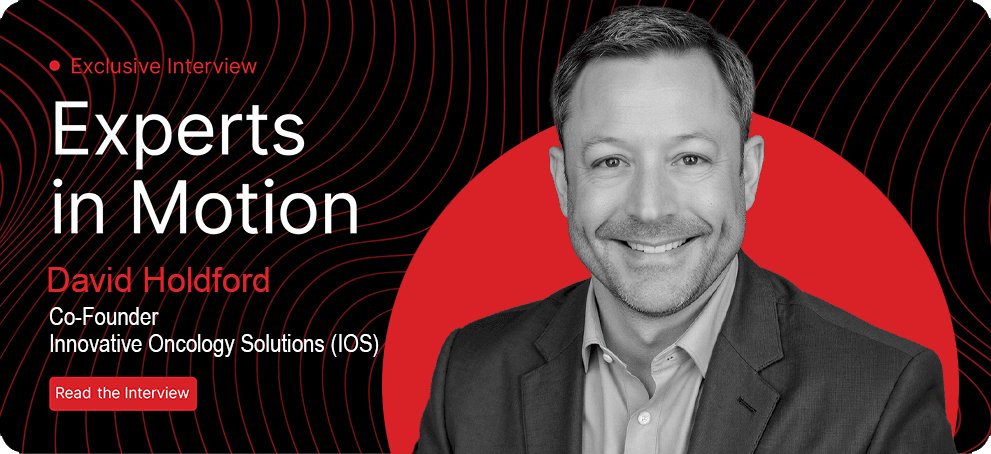
An interview with David Holdford, Co-Founder, Innovative Oncology Solutions (IOS)
By Guillaume Viallaneix | Editor-in-Chief, The MedTech Digest and President, MedTech Momentum Some interviews stay with you for professional reasons. Others feel personal. This one was both.
My father was a radiation oncologist in France, so I grew up around this world. I saw early how much rigor it demands, but also how human it is beneath the machines, protocols, and precision. That is one reason I connected so quickly with David Holdford’s story.
David is one of four co-founders of Innovative Oncology Solutions, or IOS, a company focused on patient positioning and immobilization in radiation oncology. What stood out in our discussion was not only the portfolio. It was the conviction behind it. IOS was not built to chase a trend. The founding team built it because they had seen what happens when small operational failures create very real consequences for patients. And in radiation oncology, small things are rarely small.
David, thank you for taking the time.
Guillaume: David, let’s start simply. Who are you, before IOS?
David: I’m a Memphis guy. Born here, raised here, educated here.
I studied physics, then went to law school, passed the bar, passed the patent bar, did all the things that looked right on paper. But pretty quickly I realized I didn’t want to spend my life sitting behind a desk.
That was a major turning point for me.
Guillaume: That is quite a pivot. Physics, law, then MedTech. How did radiation oncology enter the picture?
David: Almost by accident.
A college roommate pointed me toward IBA Dosimetry. I thought I was interviewing for one kind of role and ended up being pulled into sales. But once I got into radiation oncology, I stayed. It’s a small field, but a very deep one. The more I learned, the more I liked it.
And honestly, I liked the people too. There’s a seriousness to this space that I connected with right away.
Guillaume: What did those early years teach you?
David: That details matter. A lot.
At IBA, I was close to the quality assurance side of radiation oncology. You learn quickly that tiny errors are not theoretical in this field. They add up. Margins matter. Precision matters. The work matters.
Later I moved through Varian and Civco, and each chapter taught me something different. Varian showed me scale. Civco taught me more about leadership and managing people. But the thread running through all of it was the same: if you lose sight of what happens in the treatment room, you miss the point.
Guillaume: Was there one specific moment when you thought, “We need to build something different”?
David: Yes. I was at Civco, and I kept seeing situations where clinics were missing items that did not look expensive on a spreadsheet but were absolutely critical in real life. A cushion. A mask. A positioning component. Small-dollar items.
But if they weren’t there, a patient might not get treated that day.
That bothered me deeply. I remember being in discussions where the focus was on the cost of expediting a shipment. My reaction was very simple: if somebody has to suffer because we planned poorly, it should be us. Not the patient.
That was part of the emotional beginning of IOS for us.
Guillaume: That says a lot about the company in one sentence.
David: It really does.
Guillaume: So when you co-founded IOS in 2016, what did you want to do differently?
David: We wanted to build around reliability.
That sounds obvious, but it changes how you grow. We self-funded the company. We were deliberate. We did not try to grow at a pace that would break inventory discipline or create fulfillment problems. In our market, if you make promises you can’t keep, people remember.
So we grew in a measured way. Fast, actually, but measured. For years we were doubling or tripling sales, but we did it while protecting cash flow and staying in control of the business. That mattered to us. It still does.
Guillaume: For readers who are not in radiation oncology every day, how do you explain what IOS does?
David: We specialize in patient positioning and immobilization in radiation oncology.
In plain English, we help clinics position patients in a way that supports reproducible treatment. The important part is that it has to work in the real world. It has to fit workflow. It has to make sense for the anatomy being treated. It has to support consistency across fractions. And it has to be something patients can actually tolerate.
That last part gets underestimated.
Guillaume: Let’s stay there, because I think that’s one of the most interesting parts of your story. You said something to me that I wrote down immediately: comfort is becoming a clinical variable.
David: I believe that.
For a long time, people treated comfort as secondary. Nice to have. A courtesy issue. But if a patient is uncomfortable, they move more. They tense up. They struggle to stay in position. The whole setup becomes harder. So comfort is not separate from reproducibility. In many cases, it supports it.
And when you’re talking about fewer fractions, tighter margins, more scrutiny around setup consistency, that matters even more.
Guillaume: That also connects very directly to what clinics are dealing with now. Lead therapists want fewer workarounds. Physicists want reproducibility and technical clarity. Directors want smoother treatment days, not more chaos.
David: Exactly.
Those may sound like different conversations, but they all lead back to the same reality: reduce avoidable variability. Make the day more predictable. Help people do their jobs without unnecessary friction.
If you can do that, you create real value.
Guillaume: Can you give me one product example that captures that philosophy?
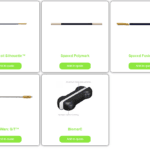
David: Sure. DSPS Prominent is a good example.
In head-and-neck treatments, shoulder positioning can become a real issue. If the shoulder position changes, even subtly, that can affect geometry in ways that matter clinically. The DSPS Prominent system helps stabilize not only the head and neck, but also the shoulders in a more controlled way.
What I like about that product is that the value is easy to understand. It solves a real problem. It’s not trying to be flashy. It’s trying to be useful.
Guillaume: Useful is underrated in MedTech.
David: Very underrated.
Guillaume: Let me ask the marketing question, because you and I both know this is where many companies struggle. At MedTech Momentum, we often see good technologies described in very generic language. What have you learned about communication in this field?
David: That clarity matters more than people think.
If you sound like everybody else, people assume you are interchangeable. That’s dangerous. Especially in a category where buyers may already be tempted to treat products like commodities.
You have to explain the operational value clearly. Not just the feature. What does it change for the therapist? For the physicist? For the person managing throughput across multiple sites? If you can’t answer that, your message won’t stick.
Guillaume: Yes. Science is essential, but science alone is not a message.
David: Exactly.
Guillaume: From the customer side, what do you most want people to feel when they work with IOS?
David: Confidence. We want them to feel that we understand what their day actually looks like. We want them to know we care about the details, that we’ll respond, that we’ll work hard, that we’re not just pushing boxes.
As a team, we go to pretty extreme lengths for customers sometimes. We’re okay with that. In fact, we’re proud of it.
Guillaume: And from the growth side, where do you see the opportunity now?
David: We still have room to grow geographically. We still have room to add products in areas that make sense, including extremity immobilization and other solutions that align with where the field is going.
But we don’t want growth that changes who we are. We want growth that reinforces who we are. That’s a big difference.
Guillaume:: Final question. Five or ten years from now, what do you hope IOS will mean to people?
David: Something meaningful.
Our founding team has never looked at this as a build-it-and-flip-it business. We want it to last. We want it to be something our families can be proud of. And professionally, I’d like people to say we built a company that cared, served customers well, and helped make radiation oncology a little more reliable. That would mean a lot.
David Holdford’s story is not loud. It is better than that. It is grounded. In a MedTech world that can sometimes sound repetitive, IOS is trying to stand for something very concrete: reproducible radiotherapy setup, practical workflow fit, patient tolerance, and reliable execution. Not as buzzwords. As operating principles.
In the end, the best MedTech stories are about reducing friction in moments that matter.
To learn more about Innovative Oncology Solutions and its work in radiation oncology patient positioning and immobilization, visit the company’s website and connect with David Holdford and the IOS team.
Published in The MedTech Digest — Experts in Motion Series | www.themedtechdigest.com