

Douglas Carroll, President & CEO of Unify Medical: How a 101st Airborne Veteran Turned Six MedTech Exits Into a Wearable Digital Surgical Microscope
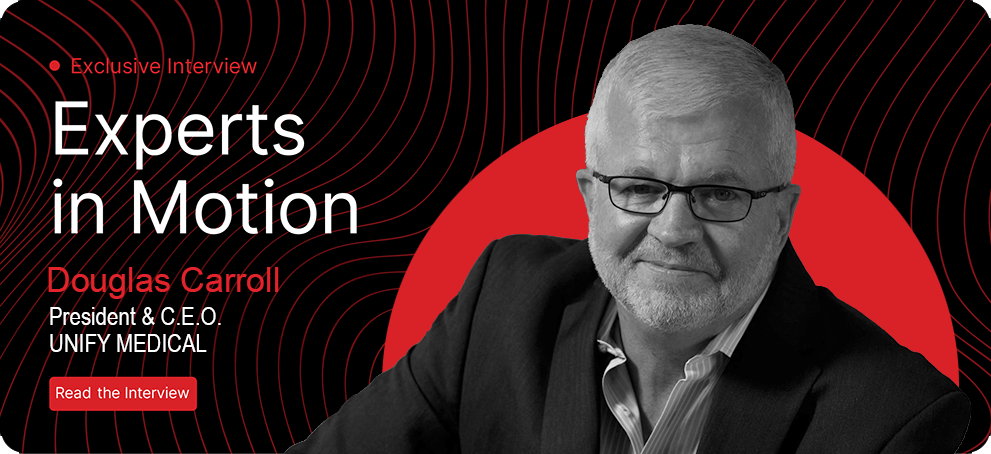
The man who helped build a $701M exit to Stryker is now bringing affordable wearable surgical magnification to hospitals, ambulatory surgery centers, and surgeons who’ve been limited by access to microscopy for far too long.
An Interview with Douglas R. Carroll, President & CEO, Unify Medical
By Guillaume Viallaneix | Editor-in-Chief, The MedTech Digest & President, MedTech Momentum
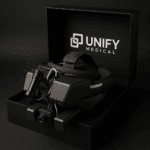
Douglas Carroll has a way of making thirty years of MedTech start-up exits sound inevitable. Army veteran. Ranger School honor graduate, companies sold to Stryker, J&J, and Guidant. And now, Douglas Carroll is President & CEO of Unify Medical, the Cleveland-based company behind SurgiSight™, a wearable digital surgical microscope delivering full-color 3D visualization in a head-worn, battery-powered device. Named a TIME Best Invention of 2024.
What struck me most in this conversation wasn’t the résumé. It was the clarity. I’ve spent over two decades in MedTech, and I’ve seen many CEOs who can talk about their technology brilliantly but struggle to explain why it matters. Douglas is the opposite. He starts with the problem, and he never loses the thread. I sat down with him to find out how he got here and where he’s taking Unify Medical next.
Guillaume Viallaneix
Douglas, you grew up with a Navy veteran father and a nurse mother. Was MedTech always the destination?
Douglas Carroll
Not consciously. But looking back, it was probably unavoidable. My father served in the Pacific in World War II, came home, and went to medical school on the GI Bill. My mother was a nurse. Service and medicine were just the air I breathed growing up. I never questioned either. The military came first. I only applied to one college- The Citadel, made that decision in fifth grade and never wavered. MedTech found me afterward.
Guillaume Viallaneix
Ranger School, the 101st Airborne, then you leave the Army in 1990, make your way to your first startup, and it fails. That’s a lot of pressure in a short window. How did that shape the way you operate?
Douglas Carroll
Ranger School removes every limit you’ve quietly put on yourself. You learn to lead when you’re exhausted, to make decisions when the margin for error is tiny, and to keep going when everything in you says stop.
“Knowing what you’re truly capable of, being pushed far beyond the limits you would otherwise place on yourself… it changes you.”
When that first startup failed and I suddenly found myself unemployed, I didn’t see it as a reason to stop. Quite the opposite actually- I jumped right back in and joined another start-up within weeks. Large companies were never for me, too far from the mission. Startups felt like the infantry units I had served in. Small teams, high stakes, everyone accountable. The military had made the hard moments manageable. “Get comfortable being uncomfortable”, as they say.
Guillaume Viallaneix
NOVADAQ is the name that keeps coming up in your background. Eleven years, $701 million exit to Stryker. What’s the one lesson from that chapter that you brought directly into Unify?
Douglas Carroll
Build the commercial foundation first. Don’t wait for the perfect clinical data package before you start building surgeon relationships, distribution infrastructure, and market evidence. At NOVADAQ, fluorescence imaging for surgical guidance was genuinely powerful technology, but the market didn’t just adopt it because it worked. We had to earn every OR, one surgeon at a time, over years. The patience and determination required to do that is something most people grossly underestimate.
What I brought to Unify was the understanding that the proof stack matters as much as the product. Take our first commercial user, Dr. Kevin Malone at University Hospitals Cleveland for example. A surgeon performing cases that otherwise weren’t feasible before, that’s not just a feel-good story. That’s exactly the kind of attributable, specific proof that moves hospitals, moves investors, and eventually moves markets. We didn’t have that at NOVADAQ in the early years. We built it. And we’re building it very deliberately here at Unify. From the ground up.
Guillaume Viallaneix
So when Unify Medical came along, what made you say yes?
Douglas Carroll
I knew the problem immediately. A traditional OR microscope costs $200,000 to $400,000. It’s fixed, heavy, and needs setup every time. Most hospitals have one or two shared across services. Ambulatory Surgery Centers often have none at all. A surgeon operating across multiple facilities can’t take a $300,000 scope along for the ride.
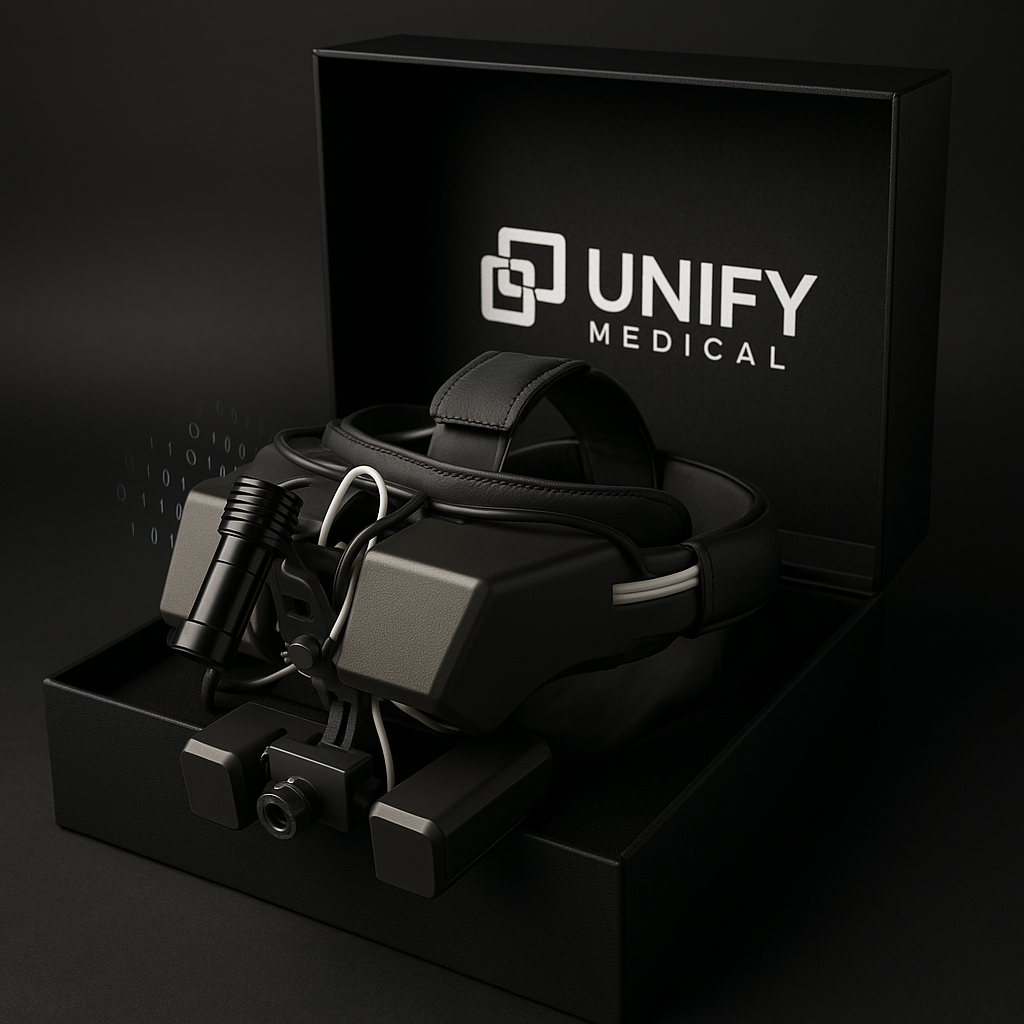
SurgiSight™ is a wearable surgical microscope, battery-powered, zero setup, 2x to 8x magnification, high-definition 3D. It costs roughly 10% of a traditional OR microscope. That’s affordable wearable surgical magnification at a level the market has never seen before. For the first time, a surgeon can carry microscope-grade 3D visualization to every facility they operate in. That’s more than an improvement on the existing model, it’s a different category entirely. When TIME named it one of the Best Inventions of 2024, it confirmed what our clinical partners were already telling us, this isn’t a niche device. It’s a meaningful shift in how surgery is performed.
Guillaume Viallaneix
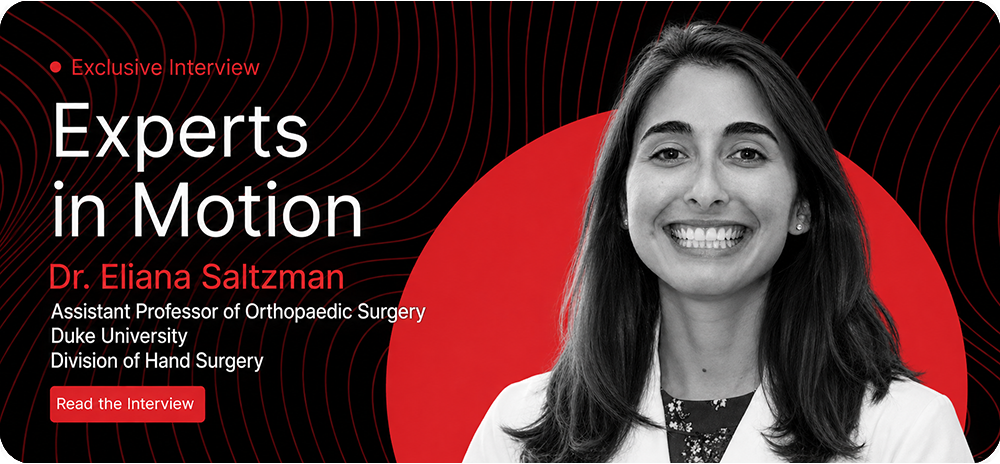
I have to bring up Dr. Kevin Malone again because I was the one who published that conversation in the Experts in Motion series and, honestly, it’s some of the most unfiltered clinical testimony I’ve seen in years. A surgeon who had to tell a his hospital they couldn’t do replants because they lacked adequate equipment. And now they can. Walk me through that story from your side.
Douglas Carroll
Dr. Malone is Chief of Hand & Upper Extremity Surgery at University Hospitals Cleveland Medical Center — one of the country’s leading hand surgery programs. When he first joined, he informed his administration that they would be challenged to do replants, not because the surgical skill wasn’t there, but because their one shared microscope was frequently committed to another service. For a hand surgeon who needs microsurgery visualization on demand, across multiple facilities, that’s an unacceptable constraint.
Then he wore SurgiSight™ in the OR. He funded it through a divisional endowment and can now carry it to literally any facility in which he operates.
“I would never even attempt digital arteries and those types of things without an operating room microscope. And now we can, because of the ability that SurgiSight gives you. That changes everything for my patients.”
That’s the proof that matters. Not a controlled study. A real surgeon, performing cases that weren’t available to his patients before, at facilities that could never justify a $300K scope. That’s the story.
Guillaume Viallaneix
Let me ask the investor question directly. You’re actively raising $10 million. What’s the case you make to someone sitting across the table from you?
Douglas Carroll
The global surgical microscope market is multi-billion dollars and growing. But our addressable opportunity is larger than that number suggests because we’re not just replacing existing microscopes. We’re unlocking a category of surgical settings that have never had access to microscope-grade visualization before. Ambulatory surgery centers. Multi-facility practices. Austere defense and third-world environments. Markets that currently have no viable solution. We’re the solution.
The proof stack is real, and it’s building. TIME Best Invention of 2024. Active Cooperative Research and Development Agreements with U.S. Special Operations Command and Naval Medical Research Command. Mayo Clinic under a know-how agreement. Surgeons performing microsurgery cases at facilities that had no microscope before SurgiSight™. And a leadership team, myself, Art Bailey, our COO, Yang Liu, our CTO, with multiple prior exits between us. We know how to build this. We’ve done it before. The $10 million gets us to the commercial inflection point and funds the development of SurgiSight’s highly anticipated telemedical and AI/AR/VR integration.
Guillaume Viallaneix
I want to ask you something from a marketing standpoint, because it’s at the core of what we do here at MedTech Momentum. A lot of early-stage MedTech companies struggle to tell their story in a way that actually moves people. What have you learned about that over thirty years?
Douglas Carroll
Talk about the patient before you talk about the product. Every company I’ve been part of believed their technology was extraordinary, and often they were right. But that’s not where the story starts. It starts with surgeons constrained by resource access. Facilities that couldn’t justify costly legacy solutions. Patients who needed a procedure that simply wasn’t available to them.
Dr. Malone’s example does more commercial work for Unify than any spec sheet ever will because it’s real. Once we got that message out, through The MedTech Digest, through the work MedTech Momentum helped us shape, everything became clearer. The technology is the answer. The patient is the reason. Lead with the reason.
Guillaume Viallaneix
Where do you see Unify in five years? And how would you like to be remembered?
Douglas Carroll
Five years: SurgiSight™, Unify Medical’s wearable surgical microscope, deployed in hospitals, ambulatory surgery centers, and multi-facility practices across the U.S. and internationally. A next-generation platform with streaming, recording, and AI-assisted guidance that changes how surgical education works. And a platform that saves lives in environments where traditional ORs don’t readily exist
As for how I’d like to be remembered, I’ve never seen any of this as a pivot. The Army, the startups, the exits, Unify. It’s the same skill set in a different environment. Mission clarity. Team-first. An unwillingness to quit.
“It’s not a pivot. It’s just an application of your skill set in a different environment.”
If that thread is visible when the whole story is told, that’s enough for me.
I’ve interviewed a lot of MedTech leaders through this series. Those who build companies that last tend to share one quality: they’re more interested in the problem than in the product. Douglas Carroll is that kind of leader. He doesn’t talk about SurgiSight™ the way a founder talks about their invention. He talks about it the way a surgeon talks about a tool they can’t operate without.
Unify Medical’s wearable surgical microscope platform has the proof, the partnerships, and the leadership to become something significant. The only question is how fast the market catches up to what the surgeons already know.
Surgical teams interested in evaluating SurgiSight™ can request a specialty-specific demonstration at www.unifymedical.com. Connect with Douglas Carroll on LinkedIn.
Published in The MedTech Digest — Experts in Motion Series | www.themedtechdigest.com