



The Microscope Is in Another Room. Again.
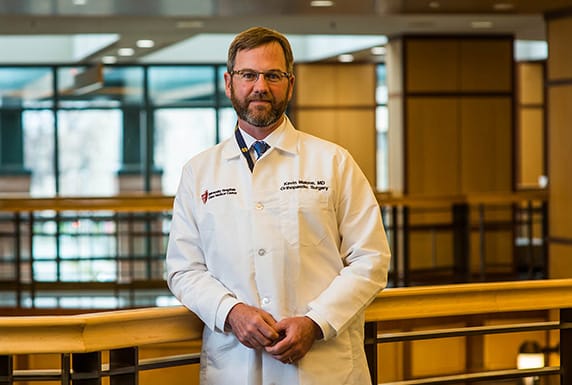
Hand surgeon Dr. Kevin Malone on why cost, portability, and access to magnification define the future of surgical care — and what changed the day he first wore a SurgiSight ™ device into the OR.
An Interview with Dr. Kevin Malone, Chief, Division of Hand & Upper Extremity Surgery, University Hospitals Cleveland Medical Center and Amy and Michael Southard Chair in Orthopedic Surgery.
Interviewed by Douglas Carroll, President & CEO, Unify Medical
Dr. Kevin Malone is Chief of the Division of Hand and Upper Extremity Surgery at University Hospitals Cleveland Medical Center and Professor of Orthopedic Surgery. He operates across multiple facilities in the Cleveland area, manages complex microsurgery cases, and trains the next generation of surgeons. He is not given to hyperbole. That is precisely why his perspective matters.
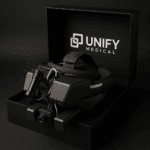
Unify Medical is a privately held smart surgical visualization company, and SurgiSight ™ is our flagship device, the world’s first wearable, 3D digital surgical microscope.
This conversation captures Dr. Malone’s early clinical impressions, unfiltered.
DOUGLAS CARROLL
Dr. Malone, let’s start with the fundamental problem. What are the real limitations of existing OR microscopy that you run into day to day?
DR. KEVIN MALONE
Well, the most significant thing is just the cost, right? An operating room microscope is prohibitively expensive. So, with SurgiSight ™, to be able to have this type of technology at a much lower price point and do things that you would not be able to do otherwise is unprecedented. And then there’s portability. The fact that it is so small and easily moved from one site to another. In the newer model of healthcare, I don’t operate in the same building for every case- I’m on the move. I go to different hospitals and different surgery centers. Previously, I would have had to limit the type of cases that I could do at these places. Now, being able to bring SurgiSight ™ with me, I no longer must do that.
DOUGLAS CARROLL
What was your initial experience like with the SurgiSight ™ device? What did it feel like using it the first time?
DR. KEVIN MALONE
It’s definitely different. It’s different than using your loupes. It’s different from using an operating room microscope. It’s sort of in between. But that’s easy to learn.
And the fact that with this, your neck is in a much better position. With most traditional surgical loupes, your neck is bent, and you’re looking down onto the field. So, it’s better ergonomics, better posture.
“A vessel — digital arteries and those types of things, I would never even attempt without an operating room microscope, we can now do without needing access to an operating room microscope because of the ability that SurgiSight ™ gives you.”
DOUGLAS CARROLL
I noticed that the case you did last week wouldn’t have been a microscopy case otherwise. Am I right about that?
DR. KEVIN MALONE
I think you’re right. Having the SurgiSight ™ option allows you to operate at the conventional magnification you would use with your loupes, and if you really need to get closer, you can. My loupes are 3.5x magnification, and I would have done the whole case at that magnification because I would not have had a microscope option. But being able to go up to 5x or 5.5x as I did when really getting around the nerve, wanting to be able to identify and visualize that anatomy to make sure that I am safe with these structures is critical for our patients’ care.
DOUGLAS CARROLL
And your confidence level operating at that higher magnification, was it meaningfully different?
DR. KEVIN MALONE
Yes, it’s a gamechanger, right? It’s all about patient safety and being able to deliver the highest quality care. I’m much more confident in what I was able to accomplish given the fact that I could see in such greater magnification and detail.
And, doing a nerve repair, you’re going to have a much higher ability to critically evaluate your repair. Is there gapping? Is there a vesicular escape? Under loupe magnification, you can’t do that. So, a peripheral nerve repair is going to be a higher quality repair with the magnification offered by SurgiSight ™. And a vessel I would never even attempt without an operating room microscope, digital arteries and those types of things, I can now do without an operating room microscope because of the ability SurgiSight™ gives you.
DOUGLAS CARROLL
Talk to me about microscope availability at your facilities. I think what you described on Friday is something a lot of surgeons will recognize immediately.
DR. KEVIN MALONE
At many healthcare settings, there’s only one microscope to be shared by multiple service lines that must coordinate cases around access. It’s really nice to have a portable microscope. SurgiSight ™ will give those physicians so much more flexibility.
DOUGLAS CARROLL
Let’s talk about where Unify Medical is headed with Gen2, specifically the streaming and recording capability. I know that’s something you’ve been thinking about.
DR. KEVIN MALONE
More than you know. We’re all academic surgeons, right? And we have to teach locally to our trainees. Being able to have them see what I’m seeing, or something similar through their headset, or even through a monitor, would be great. But also, to be able to record still images or videos that can be imported into lectures or journal articles or textbooks — that is enormous.
DOUGLAS CARROLL
Any final thoughts? What’s next for you with the device?
DR. KEVIN MALONE
This gives us options that we didn’t have otherwise. On cases that I would normally not even request a microscope; I’m going to wear this. I’m doing a case on Friday, a vascularized bone grafting for a scaphoid non-union, and I’ll likely use SurgiSight ™ for that just to get more comfortable with it. I want to wear it more frequently so I can understand all the different things it can do for me.
FINAL THOUGHTS: DOUGLAS CARROLL
What strikes me most about this conversation is how little Dr. Malone needed to be convinced. The cost barrier, the resource scarcity, the portability gap, these are constraints he has been navigating for years. Unify Medical’s SurgiSight ™ device doesn’t ask surgeons to change how they practice. It removes limits that were never acceptable to begin with.
For surgeons operating across multiple facilities, training residents, and handling complex microsurgery with limited access to dedicated equipment, that shift is not incremental. It is structural. And as Gen2 brings streaming and recording capability into the OR, the implications for surgical education and AI-assisted care are only beginning to come into focus.
Dr. Malone, thank you for your time, your candor, and your trust in our mission. I look forward to hearing more as you ramp up.
To learn more about Unify Medical and the SurgiSight ™ device:
Visit unifymedical.com
Connect with Douglas Carroll on LinkedIn
Published in The MedTech Digest — themedtechdigest.com