


Hospitals Are Losing Surgeons. Hellstern Medical Built the Fix
Surgeons generate up to 70 percent of a hospital’s revenue, yet three in four report pain and fatigue in the OR. Sabrina Hellstern and Claudia Sodha built noac to protect that revenue and the people who create it, and NATO is already on board.
An Interview with Sabrina Hellstern (Founder and CEO) and Claudia Sodha (Founder and CFO), Hellstern medical
By Guillaume Viallaneix | Editor-in-Chief, The MedTech Digest & President, MedTech Momentum
August 2026 · A seven minute read
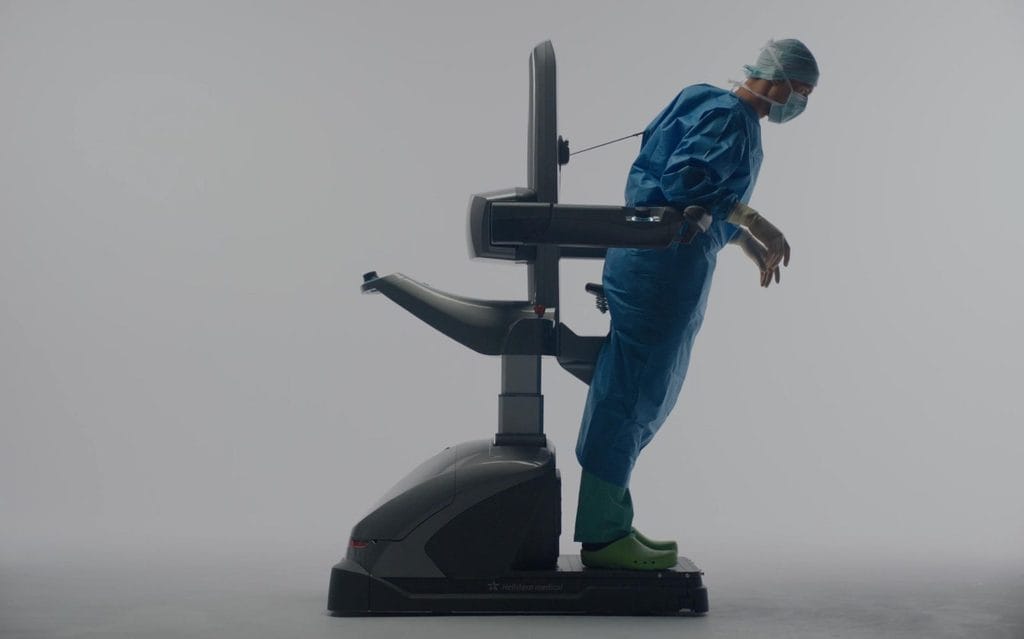
Supported by about 80 percent: a surgeon leans into a procedure posture in noac, the first robotic surgeon assist for open surgery. Photo: Hellstern medical.
Building a new surgical technology is one challenge. Building it side by side with surgeons is another.
Through our work with Hellstern medical at MedTech Momentum, I have had a front-row seat to the company’s US market entry and the people driving it. Sabrina Hellstern and Claudia Sodha have built a new class of surgical technology with surgeons, not simply for them.
By the numbers
70%
of hospital revenue is generated by surgeons
75%
of surgeons report pain and fatigue in the OR
100 to 150
days a surgeon vacancy typically sits open
5%
of all procedures reached by existing OR robots
36
international patents protect noac
~4,000
innovations NATO DIANA evaluated before selecting noac
Sources: Shah et al., Journal of Surgical Research, 2023 · Golisch et al., Current Trauma Reports, 2023 · Hellstern medical, NATO DIANA
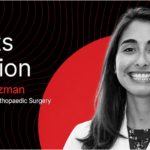
SH
Sabrina Hellstern
Founder and CEO
Pioneer in robotics and physical AI. Years in global MedTech strategy, sales, and business development before founding Hellstern medical in 2019.
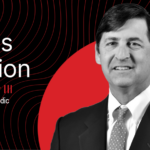
CS
Claudia Sodha
Founder and CFO
Product engineer and economist. Price Waterhouse and Hewlett Packard alumna. Joined in 2020 to lead strategy, funding, and operations.
Final portraits arrive from the Hellstern data room before publication.
Sabrina, every founder I sit down with can point to a moment when the company became inevitable. What was yours?
Sabrina: It was the same conversation, over and over, with different surgeons. I spent years in sales and business development for large MedTech companies, and surgeons kept telling me about a problem nobody was addressing. Experienced people at the peak of their careers, standing for hours, bent forward, in pain, afraid they could not do the work much longer. One of them, Prof. Martin Schuhmann, a neurosurgeon who later joined our founding team, put it very directly: please find something for me. I love my work. I am afraid I cannot do this much longer.
So I researched. There was nothing on the market, only patent archives full of attempts by surgeons themselves since the 1960s. They were surgeons, not mechanical engineers, and their devices were rigid. A surgeon cannot work in a vice. In 2019 we founded Hellstern medical to build what they were asking for, with them. There was no blueprint. Our first prototypes were wooden, with bicycle handbrakes, and surgeons stood in them every day telling us what works. Even the name carries the mission. noac means no ache.
Claudia, you came to surgical robotics from Price Waterhouse and Hewlett Packard. What pulled you in?
Claudia:My father is an engineer. When my motorbike broke down, he never had time to fix it, so I learned to do it myself. That is probably where this all started, long before Hellstern medical: if something is broken and nobody else is going to fix it, you figure out how.
I studied product engineering first, then went on to economics, because I kept meeting brilliant engineers who could build almost anything except a market for it. Engineering starts with the market, not with engineering. That one sentence has run through everything I have built since.
Years later, Martin called me. This is a cool company, he said, read the business plan. I did, and a few pages in I recognized exactly the gap I had spent my whole career studying: extraordinary engineering with nobody yet building the case for it. I joined in 2020 as a late founder and CFO, and my first job was structuring the fundraising that would take noac out of the workshop and into operating rooms.
For a reader who has never seen noac, what happens when a surgeon steps in?
Claudia: The surgeon wears a small, lightweight jacket under the sterile gown and hooks into the device with a magnet. An algorithm controlled belt follows every movement: lean forward and it supports about 80 percent of you, hold a position and you lock it and put in your full weight. Legs supported, upper body supported, and, new in surgery, the arms too, which takes tremor out of the hands during long, complicated work. The surgeon operates with their own hands, exactly as trained. The body just holds as long as the skill does.
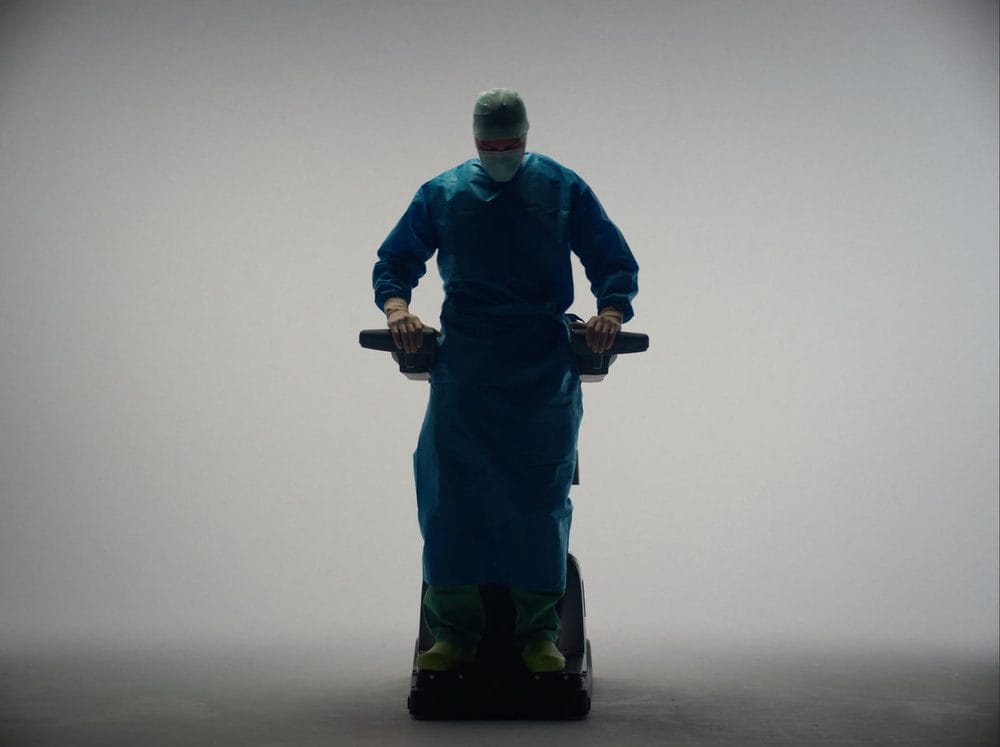
noac. A footprint no wider than a standing surgeon, 36 international patents behind the mechanism. Photo: Hellstern medical
It is a robotic surgeon assist. But it is not a robot replacing the surgeon, and it is not an exoskeleton. Where exactly does it sit?
Claudia: The big OR robots are telemanipulators. They do exactly what the surgeon does at a console, and they serve minimally invasive procedures, about 5 percent of all surgery. Exoskeletons support movement, but surgical work is mostly static holding, and an exoskeleton cannot lock. noac is a third thing: adaptive, sensor controlled, real time, what today is described as physical AI.
The way I say it is this: noac does not robotize the surgery. It enhances the surgeon. And open surgery had nothing until now.
noac does not robotize the surgery. It enhances the surgeon.
You are a CFO, and noac has two years of daily clinical use in five German centers behind it. Make the hospital case.
Claudia: Surgeon capacity is the bottleneck of surgical revenue, and you cannot hire your way out when a vacancy sits open 100 to 150 days. The published numbers are stark: 75 percent of surgeons report pain and fatigue during procedures, 40 percent take painkillers to cope, and 61 percent report burnout symptoms. noac gives a hospital two levers against that. With the same team, more surgeries. And a talent story: retain the surgeons you have, and for the first time attract new ones with a pain free working place.
The surgeons make the case for us: faster, more focused, fit for the next case. One surgeon needed painkillers against migraine after her surgeries; with noac she did not. And Martin, who considered leaving the OR for lectures, operates today and no longer thinks about retiring. That is what a hospital needs in a surgeon shortage. Our anchor is four words. We scale surgeon capacity.
Then NATO called. Selected into DIANA from almost 4,000 applicants. What did that take?
Claudia: NATO DIANA is the alliance’s innovation arm: member nations report capability gaps, and an annual challenge invites companies to close them. Medical readiness was a named priority, so we applied with a simple claim: noac scales surgeon capacity and works in extreme environments. Selected from almost 4,000 applicants, we proved it at Vigorous Warrior in Tallinn, NATO’s largest military medicine exercise, operating inside a very small OR container. It held up, logistics and all. A German military end user has ordered devices worth over one million euros, delivering this year. A field hospital and a civilian OR share the same bottleneck.
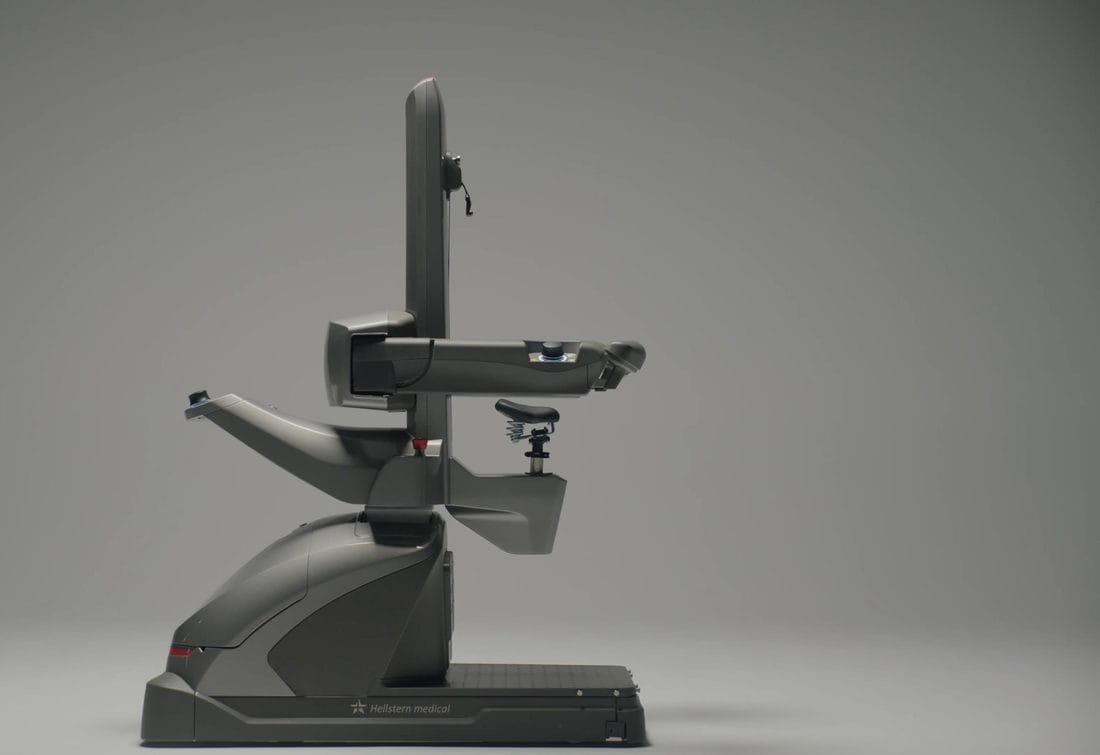
Built for the OR, proven in an OR container in Tallinn. Photo: Hellstern medical.
Let me ask the marketing question, and I will admit my bias, since my team works with you on exactly this. Why does naming and messaging matter so much in MedTech?
Claudia: Because the wrong word puts you in the wrong fight. File noac under robot and people expect a console. File it under exoskeleton and they expect a posture aid and a posture aid price. We went through many names before landing on robotic surgeon assist. And Europe taught us something bigger: leading with ergonomics was not interesting to decision makers. Leading with capacity is. Messaging is not decoration. It decides which budget line you live in.
Investors read this series. Give them the shape of the opportunity.
Claudia: A category of one, protected by 36 international patents, in daily clinical use, and validated by the most demanding customer in the world. Independent market analysts project the global surgical robotics market growing from about 8.3 billion dollars in 2025 to roughly 16.4 billion by 2032, and that education has already been done for us: hospitals know robotics equals ROI. Nobody has claimed the 70 percent of surgery that stays open.
Four focus markets: the US, India, where we launched in July, Europe with Germany as home base, and NATO, where DIANA selection opens procurement access across 32 member states. We enter the US through spine, a growing, high revenue specialty, with a subsidiary in New York and demo devices already in the country.
Where is MedTech heading in the next decade?
Sabrina: Robotics is moving from replacing motion to supporting people in real time, what is being called physical AI. The surgeon shortage has become a board level issue on both sides of the Atlantic, so technologies that multiply the people we already have will beat technologies that add complexity. And dual use is no longer a niche. What holds up in a field hospital earns trust in a civilian one.
Your advice for MedTech entrepreneurs?
Claudia: Start in the room where the problem lives. Our best decisions were made standing in operating rooms, not in meetings. Build with your users, let them tell you what is wrong while it is still made of wood, and do not be afraid if the first prototype looks funny. Ours had bicycle handbrakes.
Where do you see Hellstern medical in five years? In ten? And once all is said and done, how would you like to be remembered, as people and as business leaders who moved the needle in MedTech?
Sabrina: In five years, noac is part of the standard conversation about surgical capacity in our four markets, with a US footprint that started in spine. In ten, we are walking our long arc, what we call Solo Surgery: the surgeon working at the same performance level with collaborative robots trained for the OR workflow, physically stabilized by noac. A direction we are building toward, not a claim about today.
As for how we are remembered, I hope it is simple. The company that made robotics serve the surgeon. And if our path makes it feel normal for the next two women to build a robotics company, even better. Surgical skill should never be wasted because a body ran out.
In this conversation, they share how the idea began, what it took to bring it to life, and where Hellstern medical is headed next. My thanks to Sabrina and Claudia for sharing their story so openly.
Here is why it should matter to you. Surgeons generate up to 70 percent of a hospital’s revenue, and 75 percent of them report pain and fatigue during procedures, according to a 2023 study in the Journal of Surgical Research. A single surgeon vacancy sits open 100 to 150 days. And research published in Health Services Research puts the average cost of one surgical patient safety event at 66,879 dollars, with a 6.3 percent mortality rate. Surgical robotics has spent a decade perfecting the 5 percent of procedures that are minimally invasive. Nobody built anything for the 70 percent that are still open, until now.
A problem hiding in plain sight, solved with the people closest to it, proven in daily clinical use from university hospitals to NATO. The mission fits in four words: we scale surgeon capacity.
Hellstern medical’s US ambitions are already in motion. A New York subsidiary is open, demo devices are in the country, and the spine first launch is anchored at NASS this fall. If you are a hospital administrator thinking about surgical capacity, a surgeon who recognizes the problem in this conversation, or an investor drawn to the opportunity Claudia described, the door is open.

See noac live at NASS 2026 in San Antonio, October 14 to 17, or do not wait: demo devices are in the US now. Visit hellstern-med.com to book a demo positioning or start the conversation.
Book a demo positioning