



The Microscope Was Never Coming to the ASC
Atlanta hand surgeon Dr. John Seiler III on two years operating with a wearable 3D digital surgical microscope, why the shift from hospital to ASC is not reversible, and what it takes to get there.
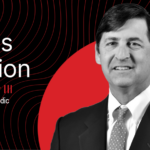
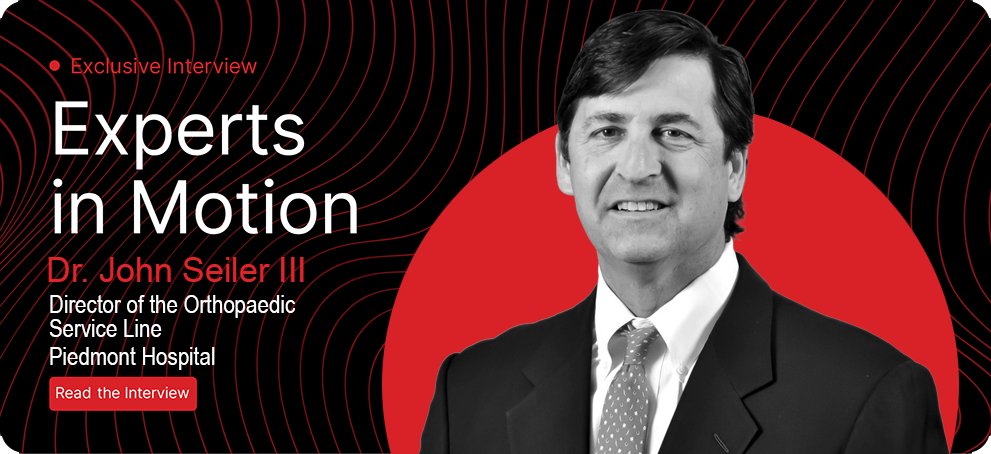
An Interview with John G. Seiler III, MD, Director of the Orthopaedic Service Line, Piedmont Hospital; Past President, American Foundation for Surgery of the Hand; Clinical Professor of Orthopaedic Surgery, Emory University. He practices with Georgia Hand, Shoulder & Elbow in Atlanta.
Interviewed by Douglas Carroll, President & CEO, Unify Medical
Experts in Motion, second in a series on access to surgical magnification. Published in The MedTech Digest.
Interviewed by Douglas Carroll, President & CEO, Unify Medical
Experts in Motion, second in a series on access to surgical magnification. Published in The MedTech Digest.
September 2026 · A seven minute read
Dr. John Seiler has spent more than three decades in hand and upper extremity surgery. He has directed the Orthopaedic Service Line at Piedmont Hospital in Atlanta, has held a faculty appointment at Emory University since 1990, and practices with Georgia Hand, Shoulder & Elbow. He has also been operating with SurgiSight for two years, and has strong opinions about where surgical care, and surgical magnification, is headed next.
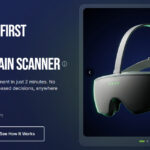
Unify Medical is a privately held smart surgical visualization company. SurgiSight is our flagship device, a wearable, 3D digital surgical microscope.
Loupe magnification, the last analog tool in the operating room
By the numbers
2 years
of clinical use with SurgiSight in Dr. Seiler’s own practice
80% → 90%
of his patients now choose the ASC over the hospital, reversed from the start of his career
TIME 2024
Best Inventions recognition for the Amplio visualization platform
Sources: Dr. John Seiler, Georgia Hand, Shoulder & Elbow, interview with Douglas Carroll, 2026. TIME Best Inventions 2024, Amplio platform.
Douglas: You’ve been operating with loupe magnification and fixed operating room microscopes for your entire career at the highest levels of hand surgery. When you first encountered SurgiSight, what was your honest initial reaction, and what specifically changed your mind?
Dr. Seiler: What I found most compelling was the ability for two surgeons to work independently, at different levels of magnification, on the same operation at the same time. That matters enormously in complex microsurgery, where surgeons work at odd angles that a fixed microscope simply can’t accommodate. This lets surgeons move as the procedure requires. Loupe magnification is great, but it’s probably the last analog thing left in my operating room. Being able to operate at different levels of digital magnification throughout a case, comfortably, is a real change in what we can do. There are significant advantages here for individual surgeons.
“Loupe magnification is great, but it’s probably the last analog thing left in my operating room.”
Two surgeons, two magnifications, one case
Douglas: Your published work and clinical reputation are anchored in flexor tendon repair and reconstruction. In the two years you’ve been using SurgiSight, have you found cases where it changed what was possible for you technically in tendon work, or are there case types where you still reach for something else?
Dr. Seiler: In this arena, SurgiSight gives you the optical magnification to work on tendons of different sizes, at different levels of the finger, with very high quality visualization. There’s also an advantage to using multiple magnifications within a single case. You might want one level for a tendon, but need a completely different level for a concomitant nerve or arterial injury. This lets you do all of that under one hood, without changing instrumentation partway through the case, which makes the case more efficient for the patient, the surgeon, and the ASC.
Douglas: Nerve repair and brachial plexus reconstruction involve some of the most demanding visualization requirements in all of hand surgery. Can you walk through a specific nerve case where SurgiSight performed in a way that surprised you, either positively or in a way that revealed a limitation you had to work around?
Dr. Seiler: In nerve transfer surgery, we have two surgeons working on different components of the case at the same time. Each needs a different depth of field and a different magnification for their piece of it. Because we’re each on independent magnification devices, we can be far more efficient, both in preparing the nerve transfer and in the repair itself. It adds real flexibility and lets two surgeons work together effectively.
What changes when magnification is affordable for an ASC What changes when magnification is affordable for an ASC
Douglas: You’ve spent a career not just operating, but measuring outcomes, including as Director of the Orthopaedic Service Line at Piedmont. From that perspective, what metrics or outcome signals have you been tracking in your own practice with SurgiSight, and what does that data tell you so far?
Dr. Seiler: In the ASC setting, you can now make a compelling case for procedures that used to be hospital bound. As CMS revises its rules about where procedures can be done, that opens the door to more cases moving into ASCs that historically couldn’t accommodate them. This level of magnification is a game changer for ASCs specifically, because it’s available at a price point most ASCs can afford, where previously they simply couldn’t justify the cost of a conventional optical microscope. As someone who’s worked to make hand surgery more accessible around the world and in underserved parts of our own country, I see real opportunity here: the ability to bring magnification to any point in your community, your state, your country, or another country, and take on complex procedures, is a genuine game changer for access.
Douglas: Georgia Hand, Shoulder & Elbow has its own surgery center. SurgiSight’s portability is one of the defining advantages in the ASC environment, where bringing in a fixed microscope is impractical or impossible. How has the technology changed the range of procedures you’re comfortable performing in your surgery center versus a hospital OR?
Dr. Seiler: We can now take on nearly the same range of procedures in either setting, unless something requires hospitalization for an unrelated reason. Historically, the barrier to doing certain cases in the surgery center has been magnification. Now that we can get high quality magnification at a more cost effective price point, we can take on in the ASC what we used to reserve for the hospital. That’s a genuine game changer for us. It increases the yield of cases we can do in a year and lets our team run more efficiently, day in and day out.
“The barrier to doing certain cases in the surgery center has been magnification. Now that we can get high quality magnification at a more cost effective price point, we can take on in the ASC what we used to reserve for the hospital.”
Where the fixed operating room microscope still wins
Douglas: For the cases where you’ve used both the fixed OR microscope and SurgiSight, can you describe the comparison as candidly as possible, where SurgiSight holds up, where it doesn’t, and whether your threshold for which cases require the fixed scope has shifted over the past two years?
Dr. Seiler: The fixed microscope is still the gold standard for OR magnification. The light and optical quality are very good, but it’s clunky. You can’t position it so two people can work effectively on the same area from different angles. That’s where SurgiSight holds up: two surgeons can work at different magnifications, from different angles, on specific parts of a case where they couldn’t before. As the optics continue to improve and stack up against a fixed OR microscope, I think this technology will be adopted rapidly by any surgeon who does microsurgery.
The defining case: nerve transfers in a surgery center
Douglas: Two years is long enough to have a defining case, a procedure where you walked out of the OR and thought, this technology did something today that I could not have done without it, or that would have required a very different setting. Can you describe that case?
Dr. Seiler: For us, it’s nerve transfers. Having surgeons work at different magnifications, at different angles, at the same time is a game changer, and it makes the case far more adaptable to an ASC setting because there’s no repositioning a shared microscope. Both surgeons work naturally, at the magnification their part of the task requires, and that genuinely changes patient outcomes, because we can move through these cases more efficiently than we could before.
From residency training to remote monitoring
Douglas: Given your role in setting standards for orthopedic surgery nationally, how do you think about SurgiSight’s place in the broader conversation about where microsurgical visualization is heading? Is this a device that belongs in residency training programs, in every hand surgeon’s ASC?
Dr. Seiler: I think this technology is on its way to becoming a core part of residency training. When I was program director at Emory, one of the changes I made was to make sure every resident had loupes, at the time, that was new. Now every resident takes it for granted that they have loupes and know how to use them properly. This is an extension of that. I see it becoming a core educational component, and as it develops further to include wireless connectivity and remote monitoring, I think residents will have a strong interest in learning to use it well.
What he tells other hand surgeons
Douglas: Last question. If a hand surgeon colleague called you tomorrow, someone you trained with, someone whose judgment you respect, and said, John, should I adopt this? What would you tell them? Not as a clinical investigator, not as a beta site. Just as one hand surgeon to another.
Dr. Seiler: I’d point to the specific improvements it gives them in practice. Every one of us is challenged right now to improve efficiency, and this gives you a real opportunity to do that in complex cases, while also opening the door to doing cases in settings where you couldn’t before. That combination, efficiency plus access, is what I’d point out to a colleague, because I think it’s genuinely compelling.
Why the shift to outpatient surgery is not reversible
Douglas: Any final thoughts or insights you want to share?
Dr. Seiler: I think you’ve covered the landscape well, why this works and where it will work. I’d add that it’ll have a real role in hospital settings too, because right now the constraint everywhere, hospital or ASC, is access: there’s one microscope, and every service line has to schedule around it. Equip several service lines with this instead of relying on a single shared scope, and you’ve made every surgeon on staff more efficient.
But make no mistake about where care is heading. When I went into practice, roughly 80 percent of my patients wanted to be treated in the hospital. Today, about 90 percent want the ASC, because they know satisfaction is higher, complications are lower, and it’s more efficient. We now move hand trauma patients out of the ER and into our surgery center to operate, then back to the hospital only if they need it. That’s not a trend. That river is never going to run the other way. If you’re on the hospital administration side and you haven’t figured that out yet, you have a lot of work to do. The magnification barrier was one of the last real obstacles to doing more of that work in the ASC. This device removes it.
“That river is never going to run the other way.”
Final thoughts from Douglas Carroll
What struck me most in this conversation is that Dr. Seiler isn’t describing a device that lets ASCs mimic the hospital. He’s describing one of the last real barriers, magnification, that kept certain hand and upper extremity cases in the hospital in the first place.
Two surgeons have now told us the same thing, in two unrelated practices, without being prompted. Dr. Malone described a hospital division scheduling around a single aging scope. Dr. Seiler describes what his team takes on once that constraint is gone. Neither of them started from the technology. Both of them started from a case they could not do where they wanted to do it. That is the pattern worth paying attention to.
He’s spent a career setting national standards for orthopedic surgery, and he’s telling us plainly that the shift toward outpatient ASC based care isn’t a possibility to plan for. It’s already underway, and it isn’t reversible. As reimbursement policy and clinical evidence catch up to that reality, the question for hospitals and ASCs alike won’t be whether procedures move outpatient. It’ll be whether they have the tools in place when patients, and surgeons, get there first.
Dr. Seiler, thank you for your time, your candor, and your trust in our mission.
To see SurgiSight in a procedure relevant to your team, or to start a structured evaluation in your surgery center, visit unifymedical.com or connect with Douglas Carroll on LinkedIn.
Visit Uniymedical.com- MedTech Leaders